
The Speculative Reader · Science · Literature · Ideas Essay · Genre Deep Dive
Fiction in Science | A Deep Dive into Sci-Fi Literature
How humanity’s wildest imaginings became one of literature’s most rigorous — and revealing — art forms.
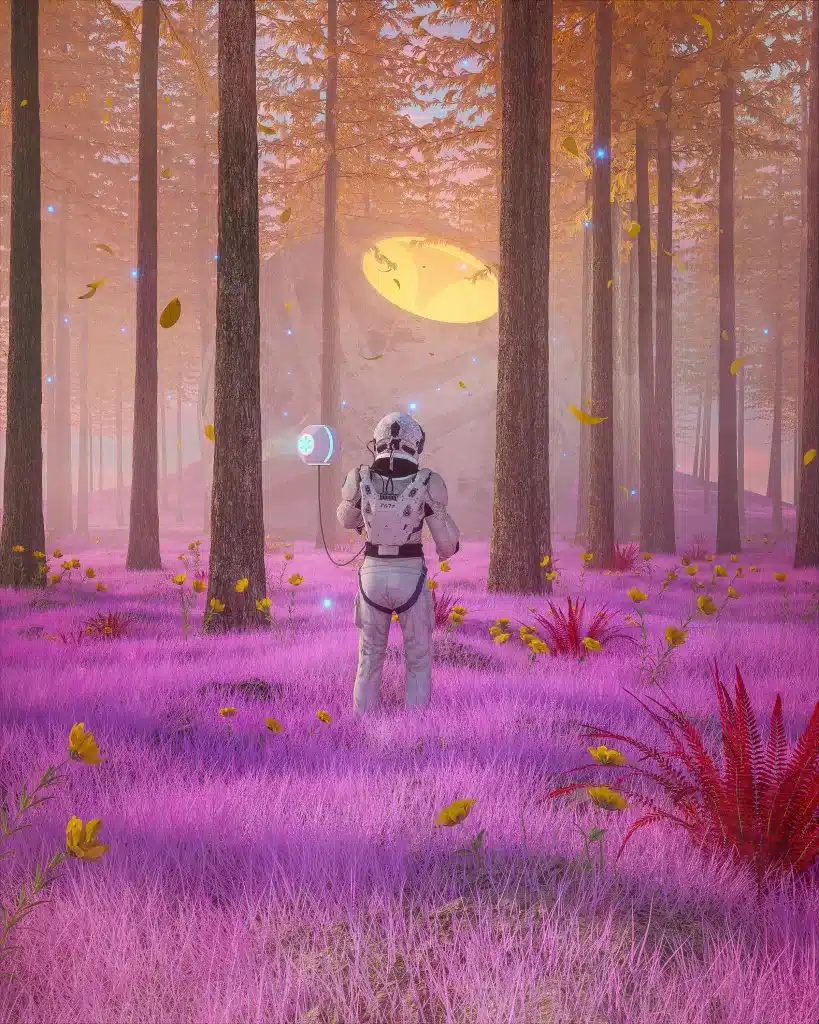
There is something quietly radical about fiction in science. Science fiction lives in the uneasy territory between what we know and what we dare to suppose. It borrows the language of laboratories and space agencies, then sets that language loose among invented worlds, impossible timelines, and strangers from the stars. It is, in every sense, a literature of “what if” — and what if, it turns out, is one of the most generative questions a human mind can ask.
In this essay we explore the meaning, characteristics, and cultural power of science fiction — from its contested definitions to its finest modern exemplars. We’ll spend time with one book in particular: Project Hail Mary by Andy Weir, a novel that crystallises everything remarkable about the genre.
“The best science fiction doesn’t predict the future. It illuminates the present by holding it up to an impossible light.”
Part I
What Is Science Fiction — and Why Does the Definition Matter?
Ask ten readers what is science fiction and you will receive ten different answers. Ask ten scholars what is a science fiction and you may receive a lawsuit. The genre is famously slippery. It absorbs neighbouring territories — science fantasy genre, dystopian fiction, speculative fiction, cli-fi, biopunk — and refuses to stay neatly inside any fence.
Yet the question what science fiction really is matters more than ever, precisely because the genre has become mainstream culture. Films, streaming series, video games, and literary prizes are all increasingly shaped by it. Understanding the science fiction definition helps readers appreciate what distinguishes a thoughtful SF novel from mere escapism, and why the genre has produced some of the most politically and philosophically serious literature of the last century.
Science fiction defined: a genre of imaginative literature in which the narrative premise rests on plausible extrapolations from established or hypothetical science, technology, or social systems — and in which those extrapolations carry meaningful consequences for character and theme.
The key word in any workable science fiction description is consequence. Spaceships are not science fiction. Spaceships whose existence changes how societies organise themselves, how humans understand consciousness, or how we relate to non-human minds — that is science fiction. The science is not decoration. It is load-bearing.
A Brief History of the Definition
Hugo Gernsback, who coined the term “scientifiction” (later shortened to its familiar form), offered the earliest formal definition for science fiction: stories in the tradition of Jules Verne, H.G. Wells, and Edgar Allan Poe — “a charming romance intermingled with scientific fact and prophetic vision.” That science fiction def privileged prediction and accuracy.
Later theorists expanded the frame. Darko Suvin’s influential concept of “cognitive estrangement” gave us a different definition of science fiction: the genre presents a world that is recognisably different from our own — the novum, or new thing — and invites rigorous, rational examination of what that difference implies. This definition is less concerned with accuracy than with intellectual honesty. The scientific fiction definition that survives into contemporary critical discourse is broadly Suvinian: not a genre of predictions, but a genre of disciplined imaginative inquiry.
To define science fiction is also, inevitably, to exclude. Purists insist that fantasy — with its magic systems and supernatural causation — belongs to a separate tradition. Others argue for a broader sci fi definition that encompasses myth, fairy tale, and any literature that refuses to accept the world as given. The definition of scifi remains contested, and that is part of its vitality.
Part II
Sci Fi Meaning, Characteristics, and What Makes the Genre Distinctive
The sci fi meaning shifts depending on whether you are talking to a publisher, an academic, or a fourteen-year-old who just finished their first Ursula K. Le Guin novel. But at its core, the meaning of sci fi is consistent: a literature that takes imagined change seriously and follows it to its logical — often unsettling — conclusions.
The sci fi characteristics that define the genre are not merely ornamental. They are functional: they govern what kinds of stories can be told, what emotional registers are available, and what questions the narrative is equipped to ask.
1. The Novum
A genuinely new element — a technology, discovery, social arrangement, or being — that drives the narrative and could not exist in the real world as we know it today.
2. Internal Consistency
The invented rules of the world must be followed. Characters cannot simply ignore the logic the author has established. This is what separates SF from fantasy at its heart.
3. Cognitive Estrangement
The reader sees the familiar made strange, or the strange made familiar — forcing fresh examination of assumptions about society, identity, and human nature.
4. Extrapolation
The story begins with known science or social conditions and follows them forward — or sideways — into new territory. Good SF shows its working.
5. Sense of Wonder
The genre trades in awe. Even grim dystopias carry an implicit amazement at the scale and strangeness of existence. Readers come to SF, in part, to feel small in the best possible way.
6. Philosophical Stakes
The best SF asks: what does it mean to be human? What do we owe each other across difference? What price progress? These are not decorative questions — they are the engine of the plot.
The science fiction characteristics outlined above also explain why the genre attracts so many readers who might otherwise describe themselves as non-fiction people. There is a rigour to good SF that feels cognate with scientific thinking: hypothesis, experiment, result. The meaning of science fiction is, in a sense, the meaning of the scientific method applied to the human experience.
Understanding what is scientific fiction also means understanding what it is not. It is not science textbook. It is not mere prophecy. And — crucially — it is not the same as science fantasy, though the two often share shelf space. The sci fi fantasy genre blends the two traditions, allowing magic-adjacent elements to coexist with technological extrapolation. Works like Star Wars are beloved science fantasy precisely because they prioritise myth and feeling over internal consistency. Pure SF, by contrast, tends to earn its miracles.
Part III
Sci Fi Novelists, the Authors of Science Fiction, and the SF Literature Tradition
The tradition of sf literature is far older than the label “science fiction.” Mary Shelley’s Frankenstein (1818) is widely considered the first true SF novel — a story in which the science is not backdrop but moral catastrophe. The creature is not a ghost or a demon but a consequence, the inevitable product of a specific experiment carried out by a specific man with a specific psychology.
The author of science fiction has always occupied an unusual cultural role: part entertainer, part prophet, part philosopher. The great sci fi novelists of the twentieth century — Asimov, Clarke, Le Guin, Dick, Octavia Butler, Samuel R. Delany, Stanisław Lem — used the genre’s freedoms to say things that mainstream literary fiction could not. Le Guin invented genderless societies. Dick interrogated the nature of reality and personhood. Butler examined race, power, and embodiment through the lens of alien contact and time travel.
Each of these writers understood the definition of sci fi in their bones: not a genre of gadgets, but a genre of human stakes played out in inhuman settings. Their work endures because the science fiction meaning they pursued was always, finally, humanist — even when humanity was the problem.
Today’s generation of scientist sci fi writers — those who bring professional scientific training to their fiction — carries this tradition forward in a new key. Kim Stanley Robinson, a geographer by training, gives us the most rigorously researched climate fiction in the language. Ted Chiang, a software engineer, writes crystalline stories about language, consciousness, and the philosophy of mathematics. And Andy Weir, whose background in computer science and lifelong passion for orbital mechanics is evident on every page, has given us something genuinely extraordinary.
Featured Work · Scientist Sci-Fi at Its Finest
Project Hail Mary by Andy Weir
Few recent novels illustrate the power and possibility of fiction in science as vividly as Project Hail Mary. The Hail Mary book follows Ryland Grace, a middle-school science teacher who wakes up alone on a spaceship with no memory of how he got there — only to discover, piece by piece, that he is humanity’s last hope against an existential solar threat.
What makes the novel a landmark of scientist sci fi is Weir’s absolute commitment to real physics, chemistry, and astrobiology. Grace doesn’t solve problems by luck or heroics; he solves them by thinking — by applying the scientific method under conditions of extreme stress and radical uncertainty. The Project Hail Mary approach to problem-solving is the approach of a working scientist, and Weir trusts his readers to follow along and feel the intellectual pleasure of each solution.
The novel also delivers one of recent SF literature‘s most moving relationships: Grace’s friendship with Rocky, an alien engineer whose species perceives the universe through sound rather than light. Their communication — worked out through patient, rigorous experimentation — is itself a miniature drama of the scientific method applied to the deepest possible question: can genuinely different minds understand each other?
What Is Fiction in Science? The Deeper Question
Phrased slightly differently, the question what is fiction in science points somewhere intriguing. It is not only asking about a literary genre. It is asking whether fiction has a legitimate place inside scientific culture itself — and the answer, increasingly, is yes.
Scientists have long used thought experiments — imagined scenarios — to probe the limits of theory. Einstein famously imagined himself riding alongside a beam of light. Schrödinger imagined a cat. These are not science fiction in the literary sense, but they share the genre’s essential move: construct an impossible or extreme situation, hold it steady, and see what the laws of nature demand of it.
The fi science relationship runs in both directions. Science feeds fiction with concepts, vocabulary, and genuine wonder. Fiction feeds science with imagination, with the willingness to ask questions before the instruments exist to answer them, and with the cultural permission to take outlandish ideas seriously. The history of technology is full of engineers and physicists who were inspired by SF — the submarine, the mobile phone, the tablet computer all appeared in literature before they appeared in laboratories.
The term fi sci — used colloquially as a shorthand for the genre — carries within it this productive ambiguity. Is the fiction serving the science, or is the science serving the fiction? In the best works, the answer is: neither. They are in dialogue, each making the other more truthful.
Part IV
Science Fiction Definition: What Every Reader Should Know
The definitions of science fiction vary, but all serious ones share a core insight: this is a genre where the imagined element is not arbitrary. It is not magic that simply happens. It is a premise that carries obligations — to internal consistency, to plausible consequence, and to the intellectual honesty of following an idea wherever it leads.
The science fiction def that serves most readers best is probably the simplest: SF is the literature of the possible and the probable, as opposed to fantasy’s literature of the impossible and the magical. But even this distinction blurs at the edges, and the most interesting SF often lives precisely at those edges.
What does science fiction mean for the twenty-first century? It means grappling with climate change, artificial intelligence, genetic engineering, social media, and global pandemic — all through the lens of imagined scenarios that reveal what our choices might actually cost. The science fiction defined tradition is not nostalgic. It is urgently, uncomfortably present.
When we ask what is sci fi today, we are asking: what are the stories we need to tell ourselves about our future? What are the possibilities we must imagine in order to either pursue or avoid them? SF is not prediction. It is preparation — of the imagination, of the moral sense, of the collective human capacity to face genuinely novel situations.
Project Hail Mary is not merely a thrilling story about a lone scientist in space. It is an argument, made in narrative form, that curiosity and rigour are themselves forms of courage.
The Science Fantasy Genre and Its Relationship to Sci-Fi
Any account of what is science fiction must at some point contend with its neighbouring genre. The science fantasy genre — sometimes called the sci fi fantasy genre — blends the rational extrapolation of SF with the mythic, magical logic of fantasy. The result can be gloriously entertaining, though it operates by different rules.
In science fantasy, internal consistency is desirable but not mandatory. A space wizard can cast spells without the author providing a thermodynamic account of where the energy comes from. The emotional and mythic truth of the story takes precedence over the scientific. This is not a failure — it is a different contract with the reader.
Understanding the distinction matters because it helps readers calibrate their expectations and their critical frameworks. Dune is science fantasy: its “science” is largely mystical, its ecology is more poetic than rigorous. The Martian is hard SF: every calorie and chemical reaction is accounted for. Both are extraordinary. Neither is doing what the other does. The sci fi fantasy genre deserves appreciation on its own terms, not as a lesser version of harder SF.
Conclusion
Why Fiction in Science Endures — and Why It Matters Now More Than Ever
Science fiction what is it, finally, if not a form of organised hope? Not naive hope — SF is too honest for that — but the disciplined hope of someone who has looked carefully at the evidence and decided that the future is not yet written. That decisions made now, by people who are paying attention, can still change the outcome.
Project Hail Mary embodies this. The Hail Mary book is, at its deepest level, a story about what happens when a single human being — frightened, amnesiac, impossibly far from home — refuses to stop thinking. Ryland Grace is not a superhero. He is a scientist. And in Andy Weir’s telling, that is enough. More than enough.
The tradition of sf literature has always insisted on this: that thinking carefully about the world — imagining it otherwise, modelling its possibilities, taking its laws seriously — is itself a form of moral action. The great sci fi novelists knew it. Every author of science fiction who has ever set a problem before a character and demanded that the character solve it honestly has known it.
Fiction in science is not a contradiction. It is a collaboration between the imaginative mind and the rigorous one — a collaboration that has given us some of the most important literature of the modern age. The definition of science fiction is, finally, this: a genre that takes both words in its name seriously. It is genuinely scientific in its commitment to consistency and consequence. And it is genuinely fictional in its insistence that the human experience — messy, emotional, morally complicated — is what all that science is ultimately for.
Read it. Argue about it. Disagree about where its boundaries lie. That argument is itself part of what makes the genre alive.
All opinions are the author’s own. Science fiction is everyone’s problem now.