
Most people let go of their integrity a little at a time. A compromise here, a small surrender there, until one day there’s nothing distinct left of them — just a person who blends into the crowd. We call it “growing up” or “being realistic.” Ayn Rand called it something else entirely, and she spent an entire novel proving her point. That novel is The Fountainhead, and if you’ve ever wondered why this particular Ayn Rand book still gets passed around dog-eared and highlighted almost eighty years after it was published, this the fountainhead summary is for you.
Table of Contents
ToggleI read The Fountainhead in 2017, during my third year of architecture school — and it’s a big part of why I’m not practicing architecture today. Stick around, because by the end of this post I’ll also tell you why this the fountainhead book summary is, for me, personal.
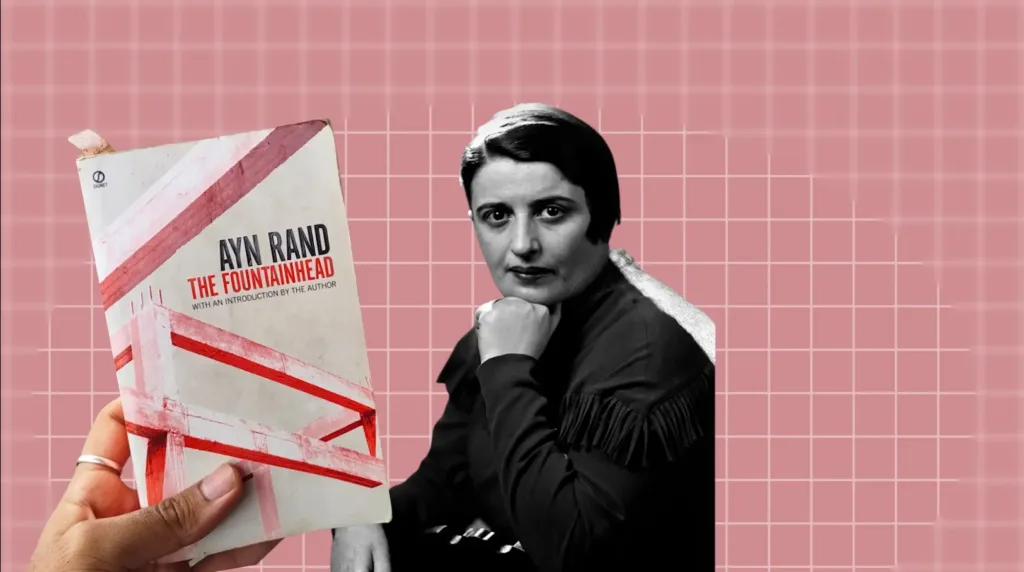
Who Was Ayn Rand?
Before we get into the
plot, it helps to know the woman behind it. Ayn Rand grew up in Soviet Russia,
a place where collectivism wasn’t just a political idea — it was the law of
daily life. People were expected to sacrifice their own wants for the good of
the state, or more accurately, for the handful of people running it. Rand left
for the United States in 1926, and by 1943 she had published The
Fountainhead, the book that would establish her as one of the most
polarizing thinkers of the 20th century.
Rand’s ideas were
heavily shaped by Aristotle, though she built much of her own philosophical
system from scratch. She called it Objectivism. In a 1959 interview with Mike
Wallace, she described it in essence as the idea that reality exists
independently of anyone’s feelings about it, that the human mind is our tool
for understanding that reality, and that a rational, reasoned approach to life
— not blind duty or blind faith — is what morality should be built on.
Strip away the
academic language and objectivism simply argues this: a person should have a
genuine, fact-based reason for everything they do, and no one has the right to
rule over another person’s mind or choices. It’s easy to see why someone raised
under Soviet collectivism, then transplanted into capitalist America, would
arrive at a philosophy built entirely around the individual. Whether her
particular version of objectivism goes too far in the direction of
self-interest is something readers still argue about — and it’s worth forming
your own opinion once you’ve read the book. But first, let’s get into the
actual story.
The Fountainhead Summary: What Actually Happens
At the center of The
Fountainhead is Howard Roark, a final-year architecture student who gets
expelled — not because he lacks talent, but because he refuses to design in the
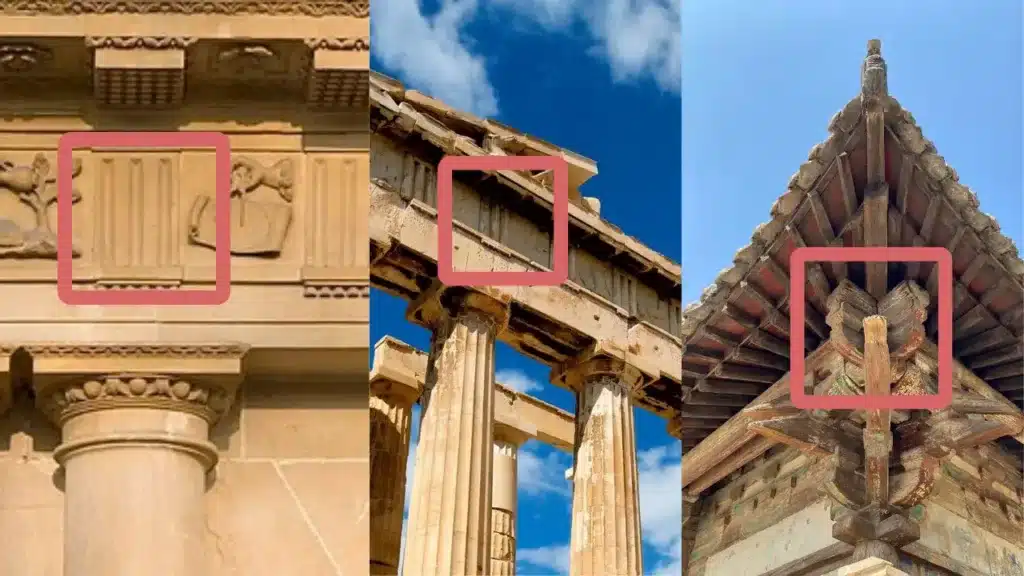
Renaissance style his professors demand. Roark’s argument, laid out early in
the book, is that Renaissance architects were themselves just copying older
Greek structural details, like the triglyphs from the Parthenon, translating
something that once made structural sense in wood into ornamental concrete. To
Roark, that’s not design. That’s a copy of a copy of a copy. As he puts it in
the book, no two building sites are ever truly alike, so no design solution
should be either.
After his expulsion,
Roark moves to New York to work under Henry Cameron, an architect whose best
days are behind him but whose vision Roark deeply respects. Meanwhile, Peter
Keating — the golden boy of the class, the one who graduated top and gets snapped
up by the prestigious firm Francon & Heyer — represents everything Roark
isn’t. Keating doesn’t design for the sake of design. He designs for approval,
for status, for the room’s applause.
Roark and Cameron’s
work is brilliant but unpopular, and the firm barely survives. Keating, on the
other hand, thrives by giving clients exactly the safe, derivative buildings
they expect — and he claws his way to partnership through manipulation as much
as talent. Eventually Cameron retires, Roark opens his own practice, and it
collapses because he won’t compromise his designs to please clients who don’t
understand them. He ends up working in a granite quarry — one that happens to
be owned by Keating’s boss, Guy Francon.
It’s at that quarry
that Dominique Francon, Guy’s daughter, first sees Roark and is instantly drawn
to him — even as Keating is trying to court her. Their relationship, once it
develops, is intense and complicated: Dominique falls for Roark privately while
working to sabotage his public reputation, believing the world isn’t ready for
someone as uncompromising as he is.
Enter Ellsworth Toohey
— the book’s antagonist, an architecture critic and self-styled champion of
“the common good” who writes for newspaper mogul Gail Wynand’s
publication. Toohey can’t stand people who succeed on their own terms, and he
sets out to destroy Roark. His plan: manipulate a client into hiring Roark to
design a temple, then turn around and sue him over the result. The scheme
works. Roark is publicly humiliated and dragged through a losing court case.
Dominique, heartbroken by how the world treats a man of real integrity, marries
Keating instead — a decision she later walks back when she meets and eventually
marries Gail Wynand, the newspaper owner.
Wynand, without
realizing the history between Roark and Dominique, becomes one of Roark’s
biggest admirers and closest friends. Years later, when Keating’s career is
exposed as hollow, he gets one final chance — a public housing project — and he
knows he can’t pull it off without Roark. Roark agrees to ghost-design it under
two conditions: the project stays credited to Keating, and not a single line of
the design is altered. Keating breaks that promise. When Roark discovers the
changes, he dynamites the building. Wynand, in a rare stand for his own
convictions, defends Roark in his newspaper — until public backlash forces him
to choose between Roark and his business empire. He chooses the business, and
it’s the moment he loses whatever integrity he had left, permanently.
Roark is put on trial
for the demolition. He represents himself, no lawyer, and delivers what is
widely considered the philosophical heart of the entire novel: a defense of
individualism against a world sliding toward collectivism. The jury acquits
him. Wynand, finally understanding what he’s sacrificed, commissions Roark to
design one last building. Dominique returns to Roark for good.
The Real Theme Behind the Fountainhead Book
Underneath the
courtroom drama and love triangle, The Fountainhead is Rand’s argument
for working in your own rational self-interest rather than living for other
people’s approval. She saw self-sacrifice — whether demanded by a government or
by social pressure — as fundamentally at odds with a person’s integrity.
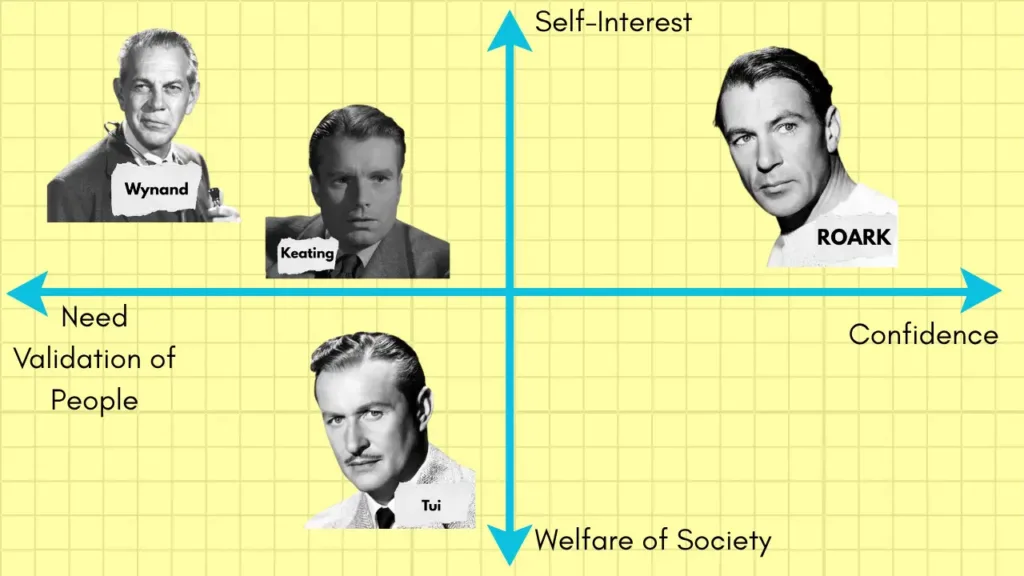
Look at the characters
through that lens and the book’s structure gets clearer:
- Ellsworth Toohey claims to act for the common good, but
Rand paints that claim as a mask for controlling people who actually
create things.
- Howard Roark works purely for himself — and
paradoxically, his buildings end up benefiting everyone who uses them.
- Peter Keating is consumed by what other people think of
him, and it eventually leaves him unable to design anything at all.
- Gail Wynand wanted power over people more than he
wanted his own convictions, and it cost him the one relationship — with
Roark — that might have redeemed him.
Rand draws a
real-world parallel here that echoes beyond fiction: figures like Henry Ford or
Steve Jobs didn’t set out to be altruists. They built things for their own
reasons, and in doing so, ended up transforming millions of lives. That tension
— self-interest that produces collective benefit almost as a side effect — is
really the engine of the whole book, and it’s the core of objectivism as Rand
defined it.
The Fountainhead Movie
If reading a 700-page
novel isn’t your speed, The Fountainhead was also adapted into a 1949
film directed by King Vidor, starring Gary Cooper as Howard Roark and Patricia
Neal as Dominique Francon. Rand herself wrote the screenplay, which means the
movie stays remarkably faithful to her original ideas — even if it can’t
capture every architectural monologue from the book. If you’ve watched it,
you’ll notice it hits the same core beats: Roark’s expulsion, the quarry, the
courtroom speech. It’s a solid companion to the novel, even if the book remains
the definitive version of the story.
Why I Left Architecture After Reading The Fountainhead

Here’s the personal part. When I actually started practicing architecture, I ran straight into the gap between Roark’s world and mine. The fees were low, the hours were long, and
— especially working in India — genuinely talented, educated designers often end up taking direction from builders and contractors who have no real interest in design itself. Art, in my experience, doesn’t survive on wages that don’t even cover twenty percent of your basic needs.
So I switched. First to creative writing, then to marketing, which is what I do today — including
writing my own book and, soon, a video summarizing it. Reading Rand’s take on
integrity didn’t hand me an easy answer, but it did make me ask the same question
Roark kept asking: why am I actually doing this? I made another blog and a video about my life in the UK and how I got a job in marketing in the UK, please check it out.
If this fountainhead summary made you want the unfiltered version, go read the book, then come argue with me about Roark’s courtroom speech in the comments. And if you’d rather
watch than read, the video embedded above walks through all of this — Ayn Rand’s
philosophy of objectivism, the full Fountainhead plot, and my own reasons for quitting architecture — in one sitting.
I’m Kavil Wagh, signing off. Like, subscribe, and I’ll see you next time.