How to get a job in UK as an International Student | 2026

How to Get a Job in UK as an International Student 2026

If you’re reading this, there’s a good chance you’re either writing something right now, or you want to be. So am I. This is the story of my MA in Creative Writing UK, the two years that followed it, and how I ended up finishing a science fiction novel while chasing international student jobs UK employers actually wanted to hire, fighting for UK marketing experience, and eventually facing the wall that is the UK skilled worker visa. I’m telling you this not because it’s a triumphant success story — it isn’t, not in the way these usually go — but because the writing never stopped, even when everything else was falling apart.

Why I Chose an MA in Creative Writing UK

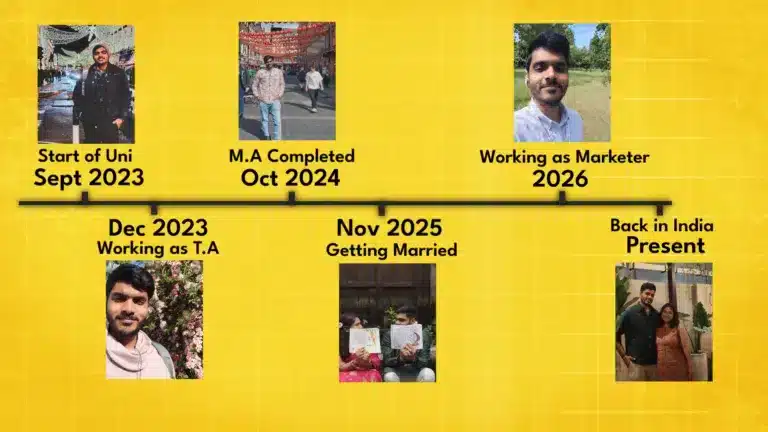
In September 2023, I moved to London to study an MA in Creative Writing at the University of
Greenwich. I already had three years of marketing experience in India, and the plan seemed straightforward on paper: study the craft properly, get some UK work experience, build a life there. What I didn’t fully appreciate until I landed was that “getting a job in the UK” comes down to exactly two things: experience and time. I had the first. I did not have the second — not even close.

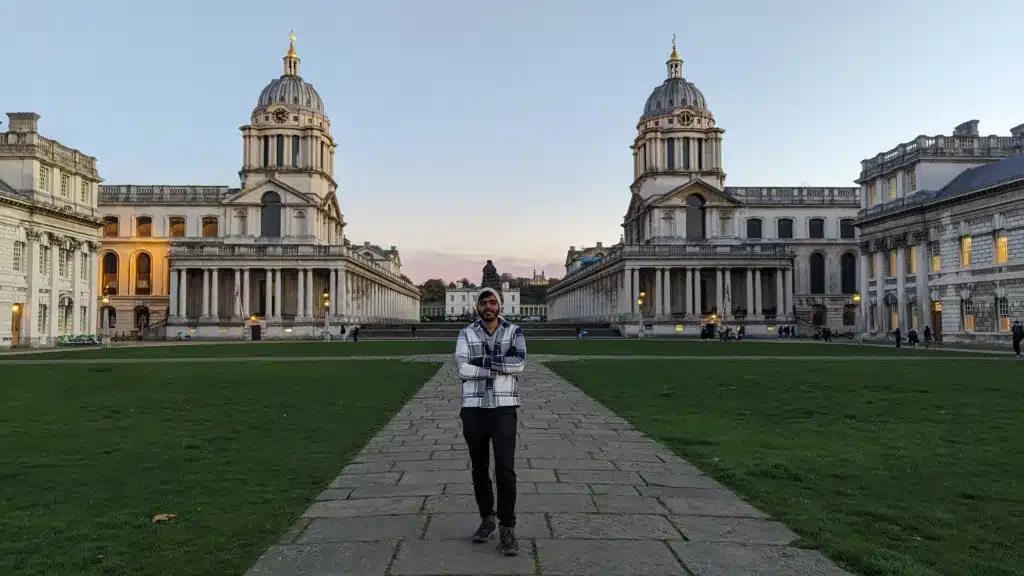
Standing in front of university of Greenwich, International student 2026

The Time Trap Nobody Warns You About

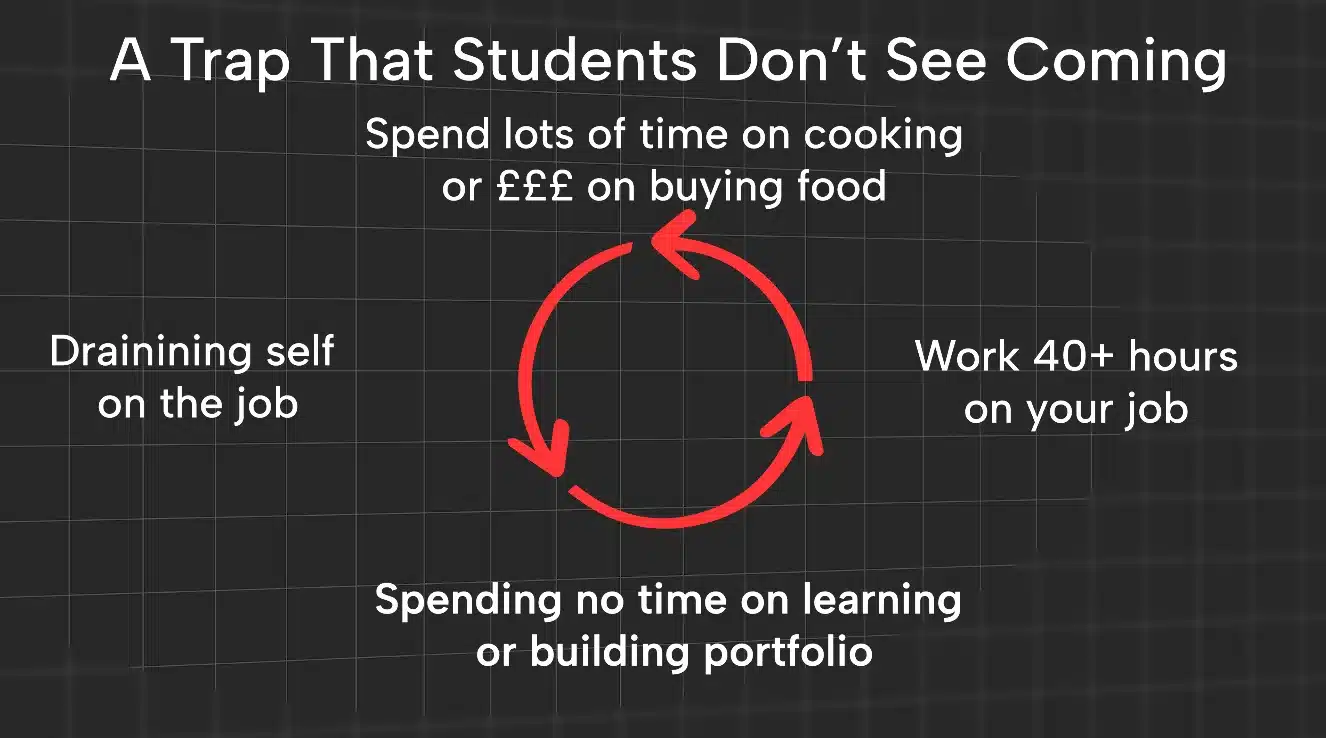
Traps that make it extremely tough to find a job as a international student in the UK
Trap students dont see coming in UK
Within days of arriving, I realized I was now responsible for cooking, cleaning, laundry, coursework, working out, and job hunting, all at once, in a country where I knew almost no one. Before I could think about writing, or even about finding a marketing job, I had to solve a much dumber problem first: how do I stop spending two hours a day just making lunch? I started batch-cooking a base — onions and tomatoes, chopped fine, caramelized, cooled, and stored — and used it across everything from chickpeas to fried rice to a quick biryani. my under-£1-a-meal student cooking method ended up being the difference between having an hour a day for my craft and not having it at all.

The Long Search for International Student Jobs UK

I searched everywhere for work in those first months — cafes, McDonald’s, offices — and got rejection after rejection for nearly two months. It was demoralizing in a very specific way: not failing at something hard, but failing at something that was supposed to be easy.

How I Landed a Teaching Assistant Role

The break came at my university’s career fair, where I met a recruiter named Bryan who placed me as a Teaching Assistant job in the UK — the full story of how I got certified, for primary school kids. It wasn’t marketing. It wasn’t what I came for. But it gave me structured hours — 8am to 3:30pm — which meant I finally had predictable blocks of time again. With that stability, I went back to my actual coursework, and this is where something shifted. While doing my MA in creative writing I fell into Marxist theory, into Plato, into more literature than I’d read in years. My classmates gave me real feedback, real recommendations. And quietly, in the background of all of it, I started working on my science fiction novel — the one I’ll tell you more about at the end of this.

How to Get a Marketing Job With No UK Experience

Getting into marketing specifically was its own separate fight. As a student, I was only allowed to work 20 hours a week, which made part-time roles scarce, and I had zero UK experience to point to — the one thing every employer seemed to want first. I filled the gap with my full story of entering the University of Greenwich £5,000 business competition, pitching a marketing agency built specifically for authors — which, if you’re an author reading this, might tell you something about where my head already was even back then. I made it to the semi-finals as the only Indian candidate in my round, and didn’t advance further. I won’t pretend that didn’t sting. But I went home, slept, and got back to work the next day.

Building a Marketing Portfolio From Scratch
Digital Marketing Portfolio recommendation

My actual method became almost ritualistic: meditate, read, write, then hunt for jobs — every single morning, in that order. I leaned hard into one lesson I picked up from a marketer whose content I kept rewatching: stop scattering your effort across every channel and go deep into one first. I chose paid media, learned Google Ads properly, and built a downloadable marketing portfolio and case-study template you can copy around companies I actually wanted to work for instead of sending generic applications into the void. I applied to more than 300 jobs. I got three or four interviews. I’m putting that number here deliberately, because I think writers need to hear real ratios sometimes, not just the eventual
good outcome.

Freelance Marketing Jobs — Walking Into Shops on My High Street

By July 2025, my Teaching Assistant work had ended for the school year, and I hit a wall of a very specific kind of boredom. So I did something a little impulsive: I started walking down my local high street, going into shops, and asking if anyone needed freelance marketing jobs help — how I pitched small UK businesses cold. Most people said no. A few said maybe. And then I passed a shop I’d never even noticed before, saw a sign for a “marketing executive” role, and walked straight in. A few days and a landing-page assignment later, I was in a two-to-three-hour interview covering everything I’d done for the past three years — one of the best interview experiences I’ve had, because it actually engaged with my work. I got the job. I built marketing campaigns, an SEO plan, email marketing, paid media — the full stack — for a business I’d genuinely never expected to end up in.

Why the UK Skilled Worker Visa Stopped My Sponsorship

Here’s the part of the story that doesn’t have a clean resolution, which is probably why it’s the part worth telling honestly. A month into the job, I went to India to get married. I left my wife behind, assuming I could bring her over on a tourist visa for a few months while I kept working. Her visa was rejected — the reasoning being that she didn’t have enough ties to India to guarantee she’d return, precisely because she’d be living with me in the UK. On top of that, my company couldn’t sponsor me under the UK skilled worker visa route. The salary thresholds required to sponsor a recent graduate now sit close to £50,000 in total employer cost once you account for visa fees, the Immigration Health Surcharge, pensions, and National Insurance — and sponsorship numbers have fallen sharply in the past year. So instead of waiting it out in London, separated from my wife for months with no guarantee of a different outcome, I made the harder but more honest choice: I came home, six months before my visa expired.

What I'd Tell Anyone Chasing International Student Jobs UK

If I had to distill it into four things: arrive with real experience already in hand, spend your early time learning even if it’s unpaid, protect your hours instead of taking every extra shift, and cook your own food. Small, unglamorous advice. But it’s the advice that actually held the whole thing together while I completed my MA in Creative writing and my Gradaute visa on my terms.

What I'd Say to Another Writer Going Through Their Own Version of This

I don’t think this story is really about the UK, or marketing, or visas, even though those are the events that happened. I think it’s about something every writer eventually has to face: the gap between the conditions we imagine we need to write — time, stability, a settled life — and the much messier conditions we’re actually handed. I used to think I’d write properly once things calmed down. Once the job was sorted. Once the visa situation resolved. That version of “once” never arrived, and I suspect it rarely does for anyone. The MA gave me language and craft, but it was the chaos around it that actually taught me how to protect a writing practice under pressure, because pressure was the only condition I ever actually had. If you’re an aspiring author reading this while juggling a day job, an unstable visa situation, a move, a newborn, or just a life that refuses to get out of the way, I don’t have a tidy formula for you. What I have is proof that a novel can survive all of it in fragments — written on commutes, in the ten minutes before a shift, in the strange quiet after bad news — as long as you keep returning to it instead of waiting for permission from your circumstances.

What This Has to Do With the Book I'm Actually Writing

Here’s the honest reason I’m telling you all of this on a page meant for readers of my fiction, not my career updates: none of the writing stopped. Not during the 300 rejected applications, not during the Teaching Assistant shifts, not during the shop job, not on the flight home. I’m currently finishing the first part of my science fiction novel, working title Age of Mechs
— read the free first chapter and follow Veeral’s story, about a boy named Veeral whose
parents have gone missing, and who tries to find them through mech fighting, a global sport
where people pilot giant machines against each other in the arena. I wrote pieces of it on the Underground, in the gaps between marking assignments as a TA, in the strange quiet after a rejected visa. If you’ve ever tried to keep a creative project alive while your actual life refuses to cooperate, I think you already understand exactly why that matters more to me than the marketing job or the visa ever did. The first chapter is free — I’ll have more on how to get your copy soon, along with more of these Behind-the-scenes posts about the book and the journey around it.

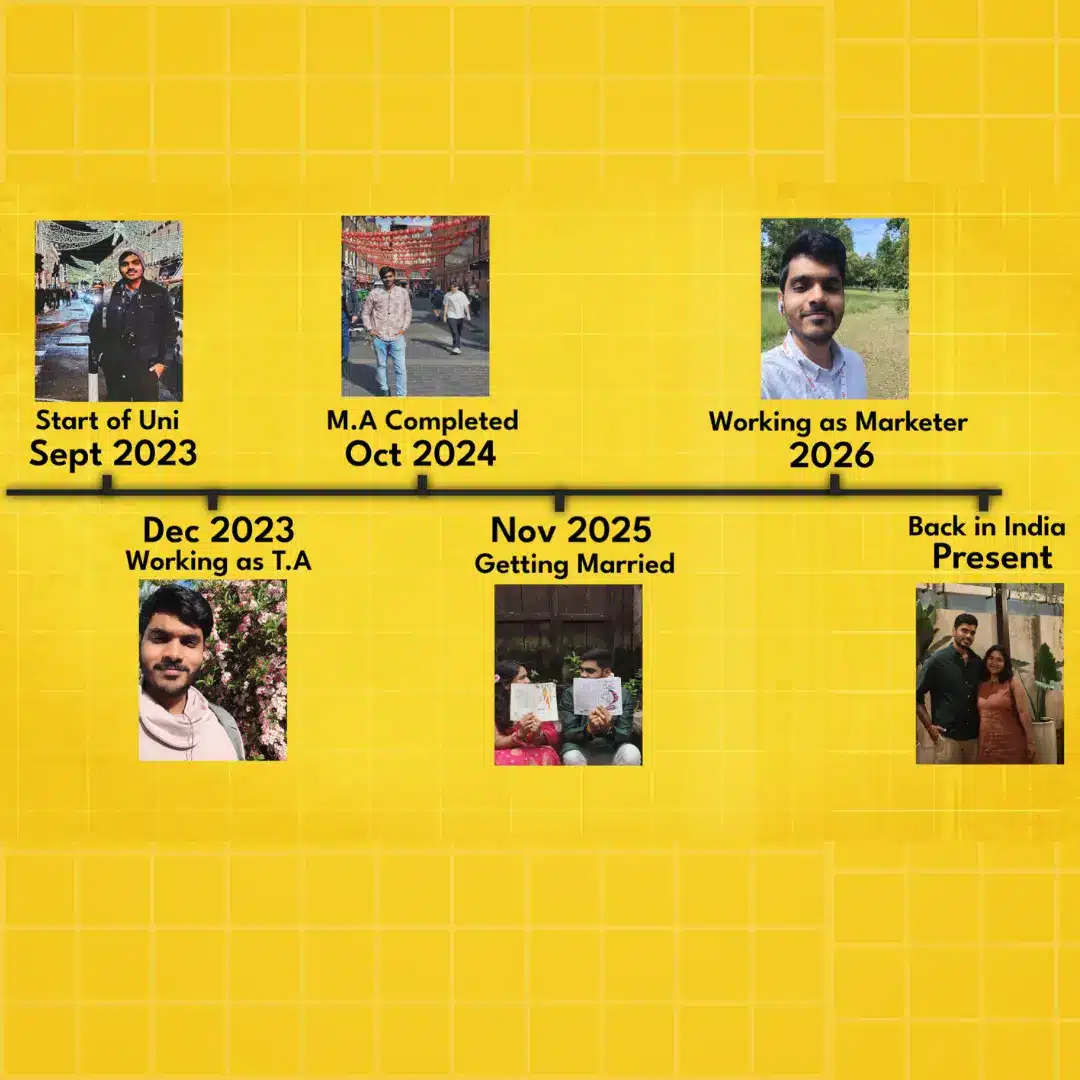
My Timeline
Timeline of me going to UK and coming back to India. International student in UK